What Is Post-Quantum Encryption and Why It Matters Now
The threat isn't coming. It's already here. Your data just doesn't know it yet.
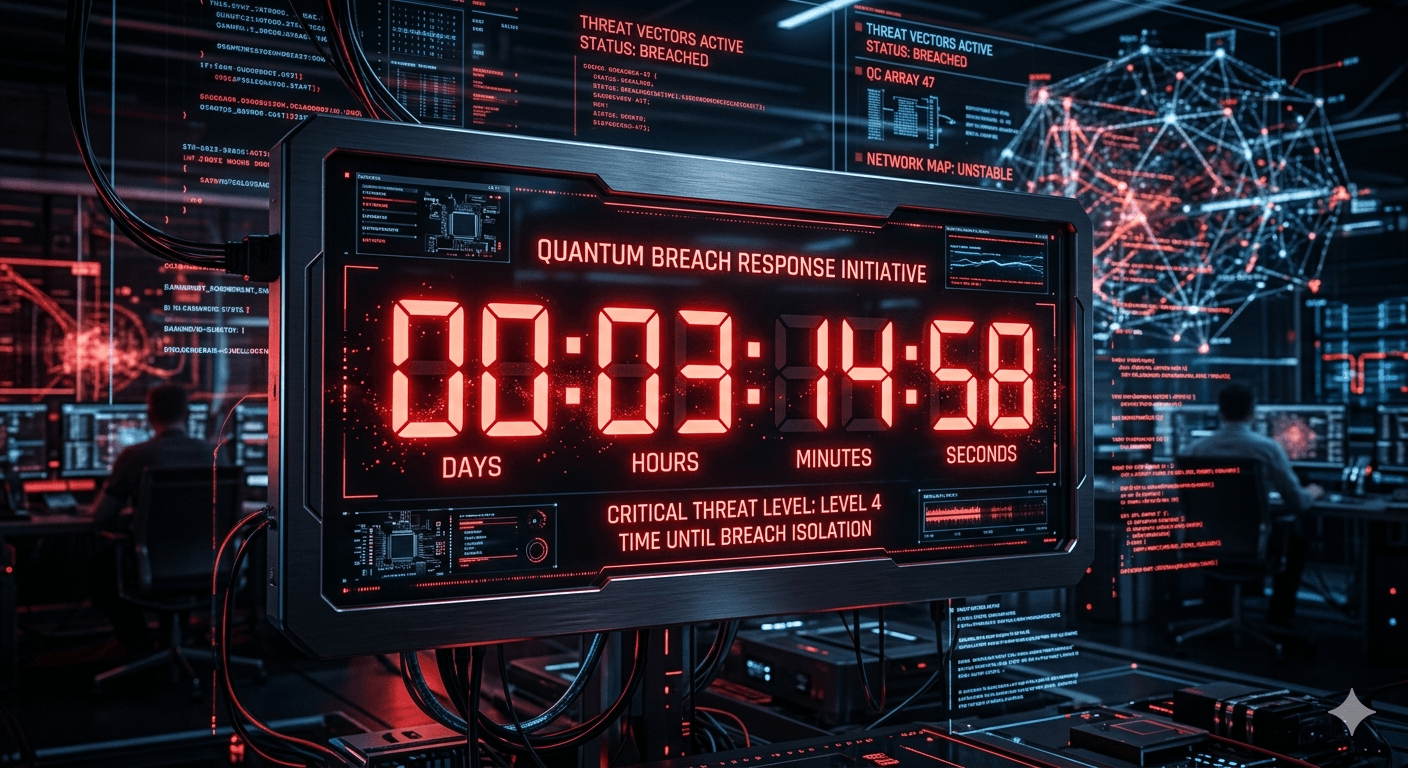
The Clock Is Ticking on Post-Quantum Encryption
Most people think quantum computing is a "someday" problem. Something to worry about in 2030, maybe. A science project for researchers in lab coats.
But that's dangerously wrong.
Post-quantum encryption isn't a future-state conversation — it's an urgent present-tense problem. Quantum computers aren't a future threat; they're a rapidly maturing reality. And here's the uncomfortable truth: the encryption protecting your most sensitive files today will be obsolete the moment a sufficiently powerful quantum machine comes online.
Not in ten years. The moment it happens.
Why Current Encryption Algorithms Face a Quantum Threat
The encryption standards we rely on — AES-256, RSA, ECC — are built on mathematical problems that classical computers can't solve quickly. They're unbreakable by today's standards.
But quantum computers don't play by those rules. They solve these problems differently. Faster. Effortlessly.
A 2019 NIST estimate suggested a capable quantum computer could break RSA-2048 in under 8 hours. Since then, progress has accelerated dramatically.
Your files are protected by a lock that will stop working the day someone builds the right key.
What Is Post-Quantum Encryption?
Post-quantum encryption (also called quantum-resistant or quantum-safe encryption) is encryption designed from the ground up to resist attacks from both classical AND quantum computers.
It uses different mathematical foundations — lattice-based, hash-based, code-based problems — that quantum computers can't crack any faster than traditional machines.
In short: it's the encryption built for tomorrow's world, available today.
Why Enterprises Must Act Before "Q-Day"
Here's the part most organizations miss: encrypted data stolen today can be decrypted later.
Nation-state actors and sophisticated attackers are already harvesting encrypted traffic. They can't read it now — but they will when quantum computers mature. That's called "harvest now, decrypt later."
If your data has value in 5, 10, or 20 years, it's already at risk.
For industries handling regulated data — finance, healthcare, legal, government — this isn't speculative. It's a compliance and fiduciary responsibility. Waiting to adopt quantum-resistant encryption isn't a neutral decision; it's an active bet that your adversaries won't get there first.
The Enterprise IRM Opportunity
Most enterprise IRM vendors are still solving yesterday's problems. They're focused on access controls, watermarking, and revocation — all important, but missing the larger point.
Security isn't just about who can access a file. It's about whether that file will still be secure in the future.
That's what Governate builds: Information Rights Management that's ready for the quantum era. Persistent, file-level protection that doesn't expire when the math changes — enforced through NIST-approved algorithms like Kyber-1024 combined with AES-256-GCM.
The Transition Is Already Underway
The shift to quantum-resistant cryptography has started. NIST finalized its first post-quantum standards in 2024, with a fifth algorithm selected in 2025. Enterprises in finance, healthcare, and government are beginning their migrations.
But most IRM platforms haven't caught up yet.
The window to lead — and to protect data already at rest — is now.
Frequently Asked Questions
What is post-quantum encryption and how does it differ from standard encryption? Post-quantum encryption uses mathematical problems — such as lattice-based algorithms — that neither classical nor quantum computers can efficiently solve. Standard encryption like RSA or ECC relies on factoring large numbers, a task quantum computers using Shor's algorithm can complete far faster than any classical machine.
When will quantum computers be able to break today's encryption? Experts estimate cryptographically relevant quantum computers could arrive between 2027 and 2030, though timelines continue to compress. IBM, Google, and state-sponsored programs are all advancing rapidly. Because of "harvest now, decrypt later" attacks, the effective risk window starts today — not on "Q-Day."
What is a "harvest now, decrypt later" attack? Nation-state actors and advanced threat groups are actively collecting encrypted data today, storing it with the intent to decrypt it once a powerful enough quantum computer becomes available. Sensitive files with long retention value — financial records, IP, healthcare data — are prime targets for this strategy.
Does my organization need quantum-resistant encryption if we already use AES-256? AES-256 is considered somewhat resistant to quantum attacks via Grover's algorithm, but asymmetric key exchange protocols (RSA, ECC, Diffie-Hellman) used alongside AES are highly vulnerable. A complete quantum-safe posture requires replacing those key exchange mechanisms with NIST-approved post-quantum alternatives like ML-KEM (Kyber).
How does Governate implement post-quantum file security? Governate applies NIST-approved quantum-resistant encryption — including Kyber-1024 for key encapsulation and AES-256-GCM for file encryption — to every protected file by default. This means enterprise file security travels with the data itself, persisting across devices, clouds, and sharing scenarios regardless of whether the underlying network encryption remains secure.
Governate is building quantum-ready IRM for the enterprise. Join the early access list at governate.com — because waiting isn't an option when the clock is already ticking.